The murder rock
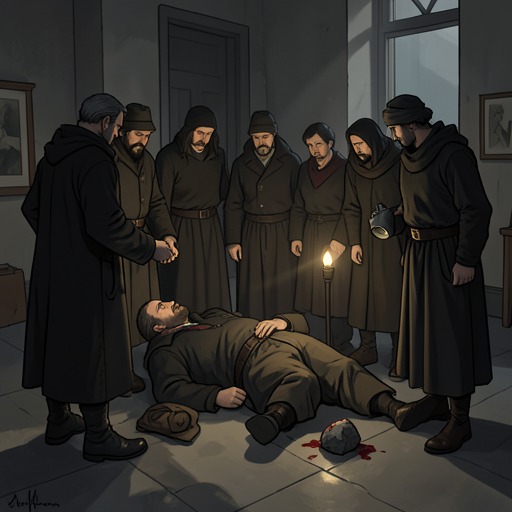
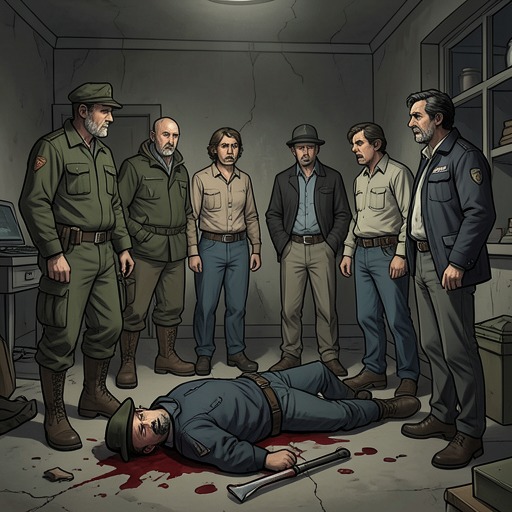
In the WoodsThe murder rock is the stone Damien Donnelly says he carried into the finds shed at the Knocknaree archaeological site and used to attack Katy Devlin. In his account, it is a readily available object taken from the edge of the dig, not a weapon brought from home. Damien later says he threw it away. Its significance in the narrative therefore comes chiefly through his description of how he obtained and used it, and through the gradual disclosure of that account during questioning.
Finding and Preparation
Damien says that he left home at about eleven at night and walked to the dig by the back lanes, avoiding the Knocknaree estate. He carried a torch and went first into the tools shed, where he took gloves. He then picked up a large rock from the ground at the edge of the site and went into the finds shed. His account places the rock within a sequence of deliberate preparations: he travelled to the site, brought light, obtained gloves, and selected the stone there.
The timing he gives makes the object part of a planned meeting that did not unfold as expected. Damien says the meeting was meant to take place at one in the morning, but Katy arrived earlier, at approximately quarter to one. He describes being startled when she knocked. She had chocolate biscuits with her and spoke briefly about a ballet school before he directed her to look at a shelf. The rock had already been brought into the shed; Damien says he then struck her from behind with it.
Use in the Attack
Damien’s first account distinguishes two blows. He says the initial strike did not incapacitate Katy. When she turned toward him and appeared about to call out, he tried to restrain her; during the struggle, he says, she moved toward the door. He then struck her again with the rock, this time on the side of her head. According to his account, she collapsed and was unconscious but still breathing. He says he could not strike her again, and describes being frightened and unwilling to continue hurting her.
The changing account gives the rock a specific and limited place in the sequence: it is the means of the attack, but not the whole of what Damien later discloses. During questioning, Rob Ryan confronts him with the post-mortem findings and with the discovery of The trowel in the tools shed, pointing out that Damien has left important conduct out of his account. The distinction matters to the object’s narrative role. Damien’s confession about the rock establishes part of what happened, while the subsequent challenge makes clear that his first telling is incomplete.
Disposal and the Body’s Relocation
After the attack, Damien says, he put a plastic bag over Katy’s head and kept it twisted until she stopped breathing. He describes using gloves again to move her from the finds shed to the excavation site. He placed her on the Knocknaree altar stone, explaining that he thought the location would keep her safe from rats and ensure that someone found her. He says he tried to make her appear to be sleeping.
Damien also recounts disposing of the rock: he threw it away. He says he rinsed the plastic bag and returned it to its place, but could not find Katy’s torch, which he believed was somewhere behind the tarpaulins. When Rob asks why he did not bury her, Damien says that he had not thought of it and wanted to leave as quickly as possible; he also resists the idea of treating her as something to be discarded. These details set the rock’s disposal beside his account of relocating the body, but the evidence presented here does not say that the stone was recovered.
Confession and Narrative Significance
Before Damien describes the rock, Cassie Maddox explains that she has consistently believed the crime was committed by someone who did not want to do it and was not ordinarily violent. Rob supports her account of that theory and asks Damien whether the idea feels familiar. After an extended pause, Damien nods. Cassie then presents confession as a way to escape a life of fear and guilt. The exchange is a deliberate appeal to Damien’s distress; the account of the rock emerges within this emotionally charged questioning, rather than through a scene in which police recover the object.
The stone’s ordinary origin sharpens the contrast between the setting and the act: Damien says he picked it up from the ground at the edge of the dig, then carried it into the finds shed. But the account also resists becoming a complete explanation. Damien presents himself as frightened and reluctant to keep hurting Katy, while Rob’s later confrontation over The trowel exposes serious details he had withheld. The rock thus anchors a confession that is both concrete and partial: it gives the attack a sequence, a place, and a means, without making Damien’s first account the whole story.